
The Global and Regional Story
Cotton, connection, and Mossley’s place in the wider world
The weaving shed at Woodend Mill may appear modest in scale, but its reach extended far beyond the valley in which it stands.
Every thread woven here was part of a global story.
Raw cotton arrived in Britain from distant continents, carried across oceans and inland along canals, before reaching towns like Mossley. Here, it was transformed by skilled hands into cloth that would travel outward again — across Britain and around the world.
This programme explores the wider network of people, places, and forces that shaped Woodend Mill, revealing how a small weaving shed in Mossley was connected to an international system of trade, industry, and human experience.
From Field to Mill
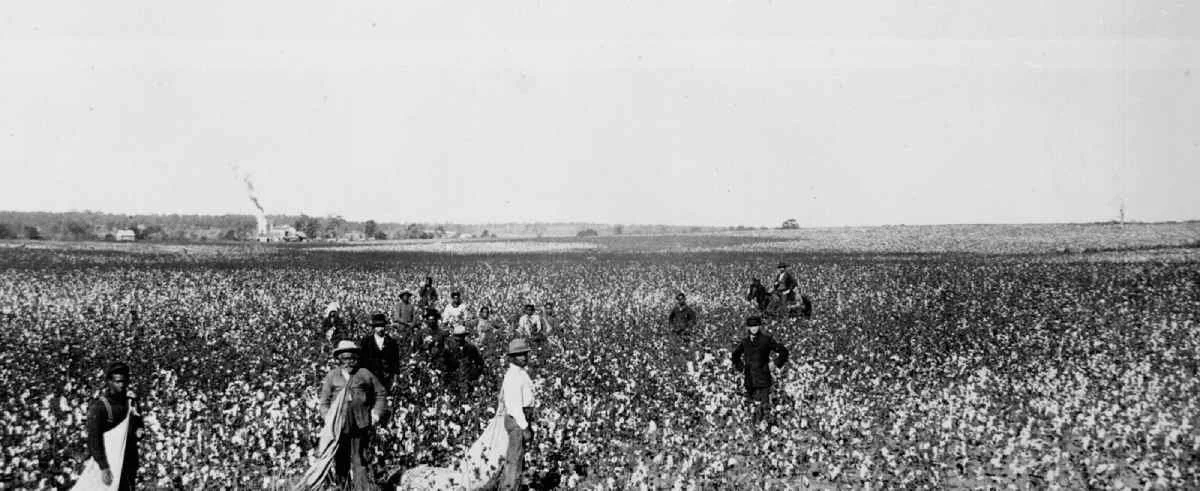
The journey of cotton began far from Mossley.
It was grown in warmer climates, harvested by hand, and transported across vast distances to ports such as Liverpool — the primary gateway through which raw cotton entered the North West of England.
From there, it travelled inland along canals and, later, railways, arriving at mills like Woodend, where it would be spun, woven, and finished.
Participants will learn to trace this journey, understanding how global movement of materials shaped local industry, and how Mossley became part of a much larger economic network.
This story reveals how even the smallest mill was part of something immense.
Cottonopolis and the Rise of the Industrial North
Manchester became known as “Cottonopolis” — the centre of the global cotton trade.
Surrounding towns like Mossley formed essential parts of this industrial landscape, each contributing to the wider process of transforming raw cotton into finished cloth.
The weaving shed at Woodend Mill played its role within this network, supporting livelihoods, shaping families, and contributing to the identity of the region.
Participants will explore how Mossley’s local history is inseparable from the rise of the North West as the world’s first industrial metropolis.
This understanding helps place Mossley firmly within the broader story of industrial Britain.
Understanding Complexity
The history of cotton is not simple. It is a story of innovation and skill, but also of inequality, exploitation, and global imbalance.
This programme will approach this history with honesty and care, acknowledging both the ingenuity of local workers and the wider systems that made the industry possible.
Participants will be encouraged to reflect on these complexities, gaining a fuller understanding of how local prosperity was connected to global forces.
This is not about assigning judgement, but about understanding truthfully.
Regional Identity and Shared Heritage
Despite its global reach, the cotton industry was lived locally.
It shaped Mossley’s streets, its families, its working lives, and its sense of identity.
Participants will explore how this shared industrial heritage continues to influence the character of the town today, and how understanding these connections helps strengthen community identity and belonging.
From Past to Present
The cotton industry that once defined Mossley has largely disappeared, but its legacy remains visible in buildings, landscapes, and memory.
By exploring these global and regional connections, participants gain a deeper appreciation of how their town fits within a wider historical story.
This knowledge helps ensure that Mossley’s role within that story is not forgotten.
Why This Matters
Understanding the global and regional story of cotton helps restore meaning to places like Woodend Mill.
It allows participants to see the weaving shed not simply as a building, but as part of a vast network of human effort, creativity, and connection.
This understanding enriches the restoration of the shed, ensuring it becomes not just a preserved structure, but a place where its full story can be shared.
Who Can Take Part
These sessions are open to everyone.
No prior historical knowledge is needed. Only curiosity, and an interest in understanding how local places connect to wider histories.
When
These activities will take place throughout the restoration period. Dates will be announced as the project progresses.