
The Life of the Loom
Skill, sound, and the human story of making cloth
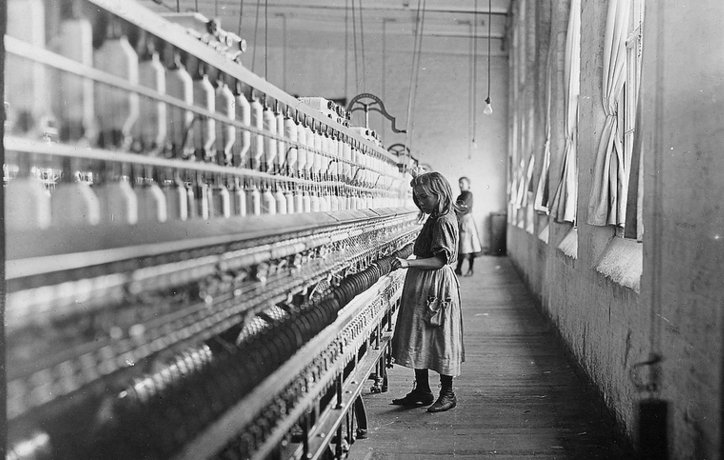
To step inside a weaving shed at its height was to enter a world defined by sound, rhythm, and concentration.
Hundreds of threads stretched across looms. Shuttles moved back and forth in precise, repeating motion. The air carried the constant mechanical pulse of production — a sound so loud that spoken words could rarely be heard.
And within this environment, people worked.
The weaving shed was not only a place of industry. It was a place of skill, adaptation, and human resilience. Every length of cloth depended on the knowledge and care of those who operated the looms, monitored the threads, and ensured the integrity of the finished fabric.
This programme explores the lived experience of those who worked in textile production, restoring attention to the human story behind the machinery.
Understanding the Weaving Process
Weaving is both a technical and tactile craft.
Participants will be introduced to the fundamental principles of weaving — how individual threads are interlaced to create structure, strength, and pattern. Demonstrations and hands-on sessions will allow participants to explore weaving techniques, gaining insight into the precision required to produce even the simplest cloth.
Through these sessions, participants will come to understand the importance of details often overlooked — such as the selvedge edge, which prevents fabric from unravelling, and the careful work of menders and finishers who ensured quality and durability.
These skills, once common, are now increasingly rare.
By experiencing them directly, participants reconnect with the craft knowledge that shaped generations.
Working in Sound and Motion
The power looms that filled weaving sheds created an environment unlike any modern workplace.
The noise was continuous and intense. Workers developed ways to communicate without speech, learning to read lips, gestures, and expressions in order to coordinate their work and support one another.
Participants will explore this sensory history through storytelling, recorded accounts, and sound-based interpretation, allowing them to imagine the atmosphere that once defined the space.
This understanding helps bring the shed back to life — not through reconstruction, but through recognition.
Recording Memory and Experience
As part of this programme, oral history sessions will invite those with personal or family connections to textile work to share their memories.
These recorded stories will preserve voices, experiences, and perspectives that might otherwise be lost.
Participants will have the opportunity to contribute their own memories or listen to the experiences of others, building a collective record of the human lives that shaped the industry.
These recordings will become part of the weaving shed’s ongoing interpretation, ensuring that its history remains grounded in lived experience.
Skill, Pride, and Identity
For many, working in the mills was not simply employment. It was a defining part of identity.
Skills were learned over years. Knowledge was passed between generations. Families and communities were shaped by shared experience of industrial life.
This programme honours that skill and recognises the dignity and expertise of those who worked within the textile industry.
By understanding their work, participants gain deeper appreciation of the people whose labour built Mossley’s industrial heritage.
From Past Skill to Present Craft
Today, interest in traditional craft is growing once again.
Participants will explore how historic textile skills continue to influence contemporary makers, artists, and designers. This connection between past and present ensures that craft knowledge remains active, not simply preserved.
The weaving shed, once restored, will provide a space where these skills can continue to be explored and shared.
Why This Matters
Machines may fall silent, but the knowledge and experience of those who worked them remain vital.
By recording stories, sharing skills, and restoring understanding of the weaving process, participants help ensure that the human story of Woodend Mill continues to be heard.
This programme restores attention not only to what was made here, but to who made it.
Who Can Take Part
These sessions are open to everyone.
Whether you have personal connections to textile work, an interest in craft, or simple curiosity, you are welcome.
When
These activities will take place throughout the restoration period. Dates will be announced as the project progresses.