
Voices from the loom: The Poetry of the Cotton Workers
What people wrote about their lives in the mills reveals as much as the machines they worked beside.
“For we’re one and all together,
Through poverty and pain;
And when trade comes back to t’ country
We shall work our looms again.”
— Samuel Laycock
Voices from the Loom
The cotton industry was powered by more than steam and machinery. It was powered by voices.
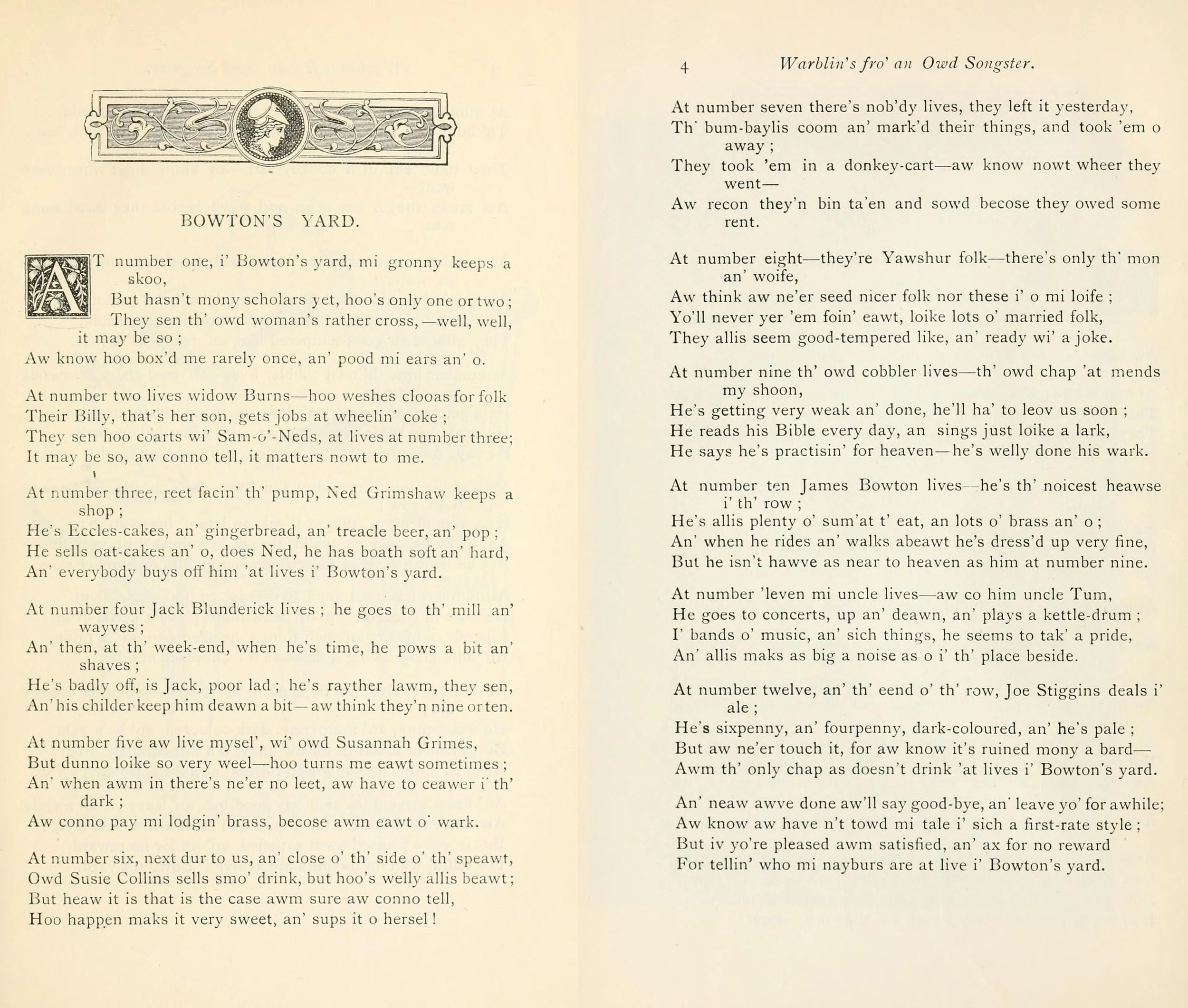
The weaving towns of the Tame Valley were centres of extraordinary industry, but they were also places of language and expression. Amid the steady rhythm of the looms, mill workers developed a rich tradition of dialect poetry and spoken verse that captured everyday life in Lancashire’s textile communities.
A Living Record of the Mill
Unlike formal histories, much of this poetry was written by the workers themselves. In the local Lancashire dialect, they described the realities of mill life: the hardship of the Cotton Famine, the humour of the weaving shed, and the resilience of the communities built around the industry.
From the well-known verses of Samuel Laycock in nearby Stalybridge to anonymous ballads sung on street corners, these words preserve the voices of the people who worked in the mills and the language they spoke.
Bringing the Spoken Word Back to the Shed
Voices from the Loom reconnects this heritage with its historic setting at Woodend Mill.
Through recordings, recitations and community participation, the project explores the poetry of the cotton workers and the spoken culture of the textile towns.
Planned activities include:
Poetry Listening Points
Visitors will be able to stand within the weaving shed and hear recordings of historic dialect poetry connected to the cotton industry.
A Living Archive
Local residents will be invited to record their own readings of historic poems or share reflections on their family’s connection to the textile industry.
Live Recitations
Occasional spoken-word evenings will celebrate Lancashire dialect poetry and working-class literature.
Poetry offers a different kind of historical record. It tells us not only what people did, but how they felt, what they feared, and what they hoped for. By listening to these voices we honour the individuals behind the cloth and keep the human story of the Tame Valley alive.
Preserving the Voices of the Cotton Towns
Many of these poems were originally shared through memory, recitation and local print, and some risk being forgotten as the generations who worked in the mills pass on. By recording and sharing these voices at Woodend Mill, the project helps preserve an important part of Lancashire’s cultural heritage.
Through community participation and new recordings, Voices from the Loom will create a growing archive of spoken poetry connected to the textile towns of the Tame Valley, ensuring that the language, humour and experiences of the cotton workers continue to be heard.
Voices from the Loom forms part of Lives in the Loom, the Thread & Butter Collective heritage programme exploring the human stories of Woodend Mill alongside The Life of the Loom, which focuses on textile processes and making.
Together, these projects reconnect building, craft, and community — ensuring the weaving shed remains a place shaped by people.