
landscape & power
Water, geography, and the forces that shaped Woodend Mill
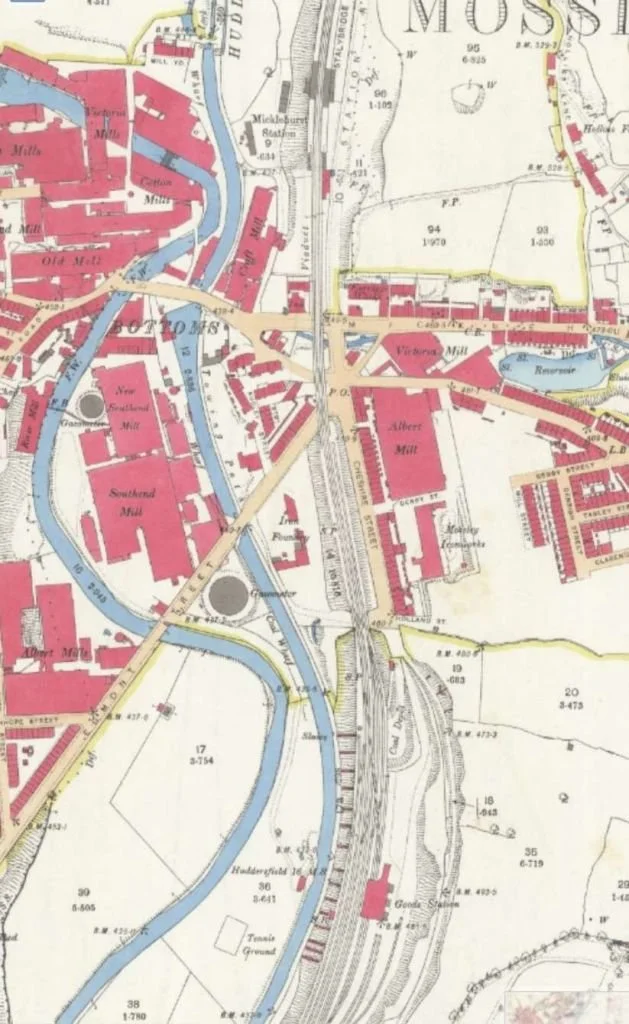
The Weaving Shed at Woodend Mill was not built in isolation. Its position — between the Huddersfield Narrow Canal and the River Tame — was deliberate.
This landscape provided everything the mill required: water to power machinery, routes to transport raw materials and finished cloth, and access to the wider industrial world beyond Mossley. The geography of the valley dictated not only where the mill stood, but how it functioned, how it connected, and how the town itself grew around it.
This programme invites participants to explore the landscape as an active force in Mossley’s industrial story — not simply a backdrop, but a participant.
Following the Water
The River Tame and the canal network formed the lifelines of early industry.
Before the arrival of the railway, raw cotton travelled inland from the Port of Liverpool along canals that wound through the valleys of the North West. These waterways connected Mossley to a vast global network of trade, linking local labour to distant places and unseen lives.
Participants will be invited to join guided walking routes tracing the physical relationship between the weaving shed, the canal, and the river.
Standing beside the water, it becomes possible to understand how materials arrived, how goods departed, and how the movement of water itself enabled the movement of industry.
These walks reconnect the mill to its wider geography, restoring an understanding of how place shaped possibility.
Power and Movement
Water was not only a route, but a source of power.
Rivers drove early machinery. Canals allowed heavy materials to move efficiently. The landscape determined where mills could operate and where communities could grow.
Participants will learn how the physical forces of gravity, flow, and terrain influenced industrial design and human settlement. They will see how Woodend Mill was positioned to harness these forces, and how its survival today remains tied to its relationship with the surrounding landscape.
This understanding reveals industry not as something imposed upon the land, but something shaped by it.
The Human Geography of Industry
The canals carried more than cotton. They carried people, skills, and stories.
Boat workers, mill workers, engineers, and families all moved through this network. Communities formed alongside the waterways, and generations built lives shaped by their rhythms.
This programme will invite participants to share their own connections to these places — whether through family history, work, memory, or simple familiarity.
These personal stories help reconnect the industrial landscape to the human lives that animated it.
Seeing the Familiar Anew
Many people pass these waterways every day without realising their historical significance.
Through guided exploration and shared learning, participants will be encouraged to see familiar places with new awareness — to recognise how Mossley’s identity is inseparable from its geography.
The landscape becomes not just scenery, but evidence.
Evidence of ingenuity, adaptation, and endurance.
From Past to Present
The waterways remain active today, though their purpose has changed.
They now carry leisure craft rather than industrial cargo. They offer quiet routes for walking and reflection. Yet their presence continues to shape the character of the town.
By understanding their history, participants gain a deeper appreciation of how past and present remain connected.
Why This Matters
The story of Woodend Mill cannot be understood without understanding the landscape that made it possible.
By exploring these waterways and the geography of the valley, participants help restore a sense of continuity between the town’s industrial past and its present community.
This knowledge ensures that the physical and human connections that shaped Mossley are not lost, but remembered and shared.
Who Can Take Part
These walking sessions and heritage explorations are open to everyone.
No prior knowledge is needed. Only curiosity, and a willingness to see familiar places in new ways.
When
These activities will take place throughout the restoration period. Dates will be announced as the project progresses.